

Overview:
- Case studies help B2B buyers evaluate how products perform in actual project conditions.
- A problem-solution-outcome format connects customer needs with project decisions and results.
- Specific technical details, verified results, and firsthand customer quotes build credibility.
- Case studies can support sales conversations, trade media outreach, and content across digital channels.
- Clearly structured, useful case studies can also support visibility in search and AI-generated answers.
Every completed project has a story behind it: a problem to solve, decisions to make, and lessons learned along the way. A well-written case study brings those details together, showing prospective distributors, specifiers, contractors, and end-user customers how a product performed and what they can learn from the experience.
A good case study explains the project team’s challenge, why a particular solution was selected, how it was implemented, and what the project achieved. It provides prospective customers with practical information they can use when evaluating their options.
For building product industry decision-makers, those details matter. Architects, specifiers, contractors, and home or building owners have different priorities, but each needs to understand how a product will perform on the job. A well-written case study helps answer those questions through a documented project experience.
Why Are Case Studies Important in B2B Marketing?
Choosing a product often involves several people or teams, technical requirements, and a considerable investment. A case study gives everyone involved something specific to evaluate.
It can help your business:
- Build credibility. Support product claims with project details, customer observations, and documented results.
- Answer practical questions. Explain how the team handled installation requirements, space limitations, scheduling, or maintenance considerations.
- Support sales conversations. Give your sales team relevant examples to share when prospects raise similar concerns.
- Create opportunities for media coverage. Provide trade editors with an application story that offers useful lessons for their readers.
The project doesn’t have to be your largest or most recognizable installation, either. A familiar problem with a well-documented solution can be valuable to someone facing the same issue.
What Are the Components of a Good Case Study?
A useful case study follows the project from the initial challenge through the outcome. These seven components give readers the information they need.
1. A Clear Headline and Project Summary
Your headline should tell readers what makes the project worth their time. Focus on the application, the problem addressed, or a verified result.
For example, “Prefabricated Piping Helps Contractors Meet a Tight Installation Schedule” gives readers a clearer reason to continue than “Another Successful Project.”
Follow the headline with a short summary identifying the customer, application, solution, and main outcome. This helps busy readers decide whether the story is relevant to their work.
2. Relevant Customer and Project Details
Establish the setting before discussing the product. Include details such as:
- Project type and location
- Owner or customer
- Key project partners and their roles
- Scope of work
- Operating conditions, design requirements, or product specs
Choose details that explain the decisions made. For an occupied building renovation, maintaining operations may be central to the story. For an industrial installation, chemical exposure or operating temperature may deserve more attention.
3. A Specific Challenge
Explain what the team needed to accomplish and what made the work difficult.
“Installation was challenging” leaves readers with questions. Describe the actual constraint: limited access, a narrow construction window, an unusual configuration, or a need to accommodate future maintenance.
Then explain the consequences. Would a delay affect other trades? Did the equipment need to fit within an existing footprint? This context helps readers understand why the solution mattered.
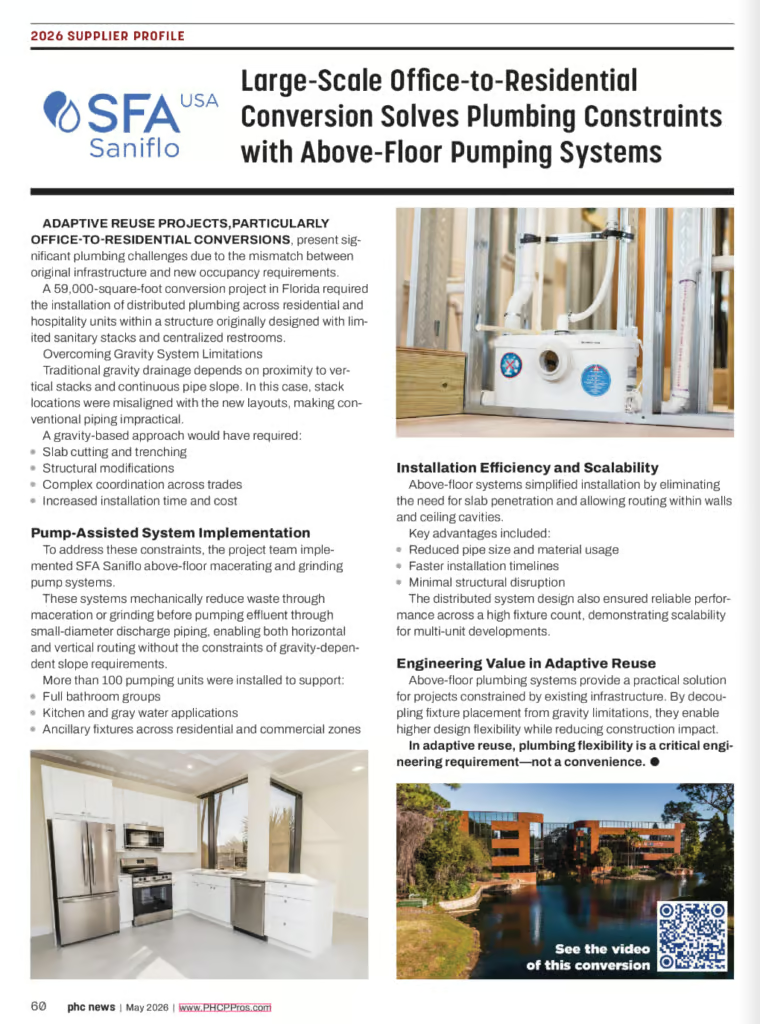
For example, the Saniflo case study below explains how an office-to-residential conversion faced plumbing constraints because existing sanitary stacks did not align with the new layouts. Establishing that challenge helps readers understand why the team selected above-floor pumping systems.
4. The Reason Behind the Selection
Explain why the project team chose the product(s) or approach.
Identify the requirements that influenced the decision, such as material compatibility, dimensions, installation methods, appearance, or technical support. Include alternatives if they were considered and can be discussed accurately.
Keep the explanation tied to the project. Readers should understand which product characteristics addressed which requirements.
5. An Account of the Work
Describe what happened during installation or implementation. This is often where the most useful details emerge.
Did the manufacturer provide training? Were assemblies prefabricated? Did the contractor adjust the installation sequence? Was an unexpected field condition resolved?
Give credit to the people involved and explain their contributions. These details help readers picture how the work came together.
6. Documented Results
Results should answer a straightforward question: What did the solution help the team accomplish?
Depending on the project, useful measures might include:
- Installation labor hours
- Material waste
- Energy or water consumption
- Maintenance requirements
- Completion time
- Measured operating performance
Provide context for every number. If installation required fewer labor hours, explain the comparison and who supplied the figures. Distinguish projected savings from measured results.
When numbers are unavailable, use specific, attributed observations. A contractor’s account of completing work within a scheduled shutdown can still be useful. Avoid turning one project experience into a promise about every future installation.
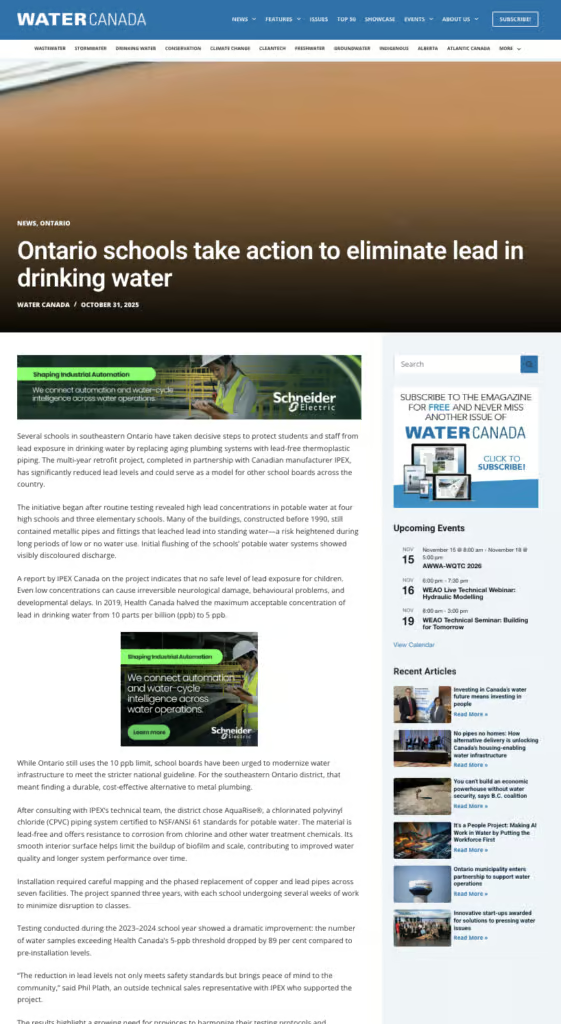
The published case study on the left includes a measured result and a comparison with conditions prior to installation: “This Ontario school retrofit story supports its outcome with testing results, reporting an 89% reduction in samples exceeding Health Canada’s 5-ppb threshold.”
7. Customer Perspective and Supporting Visuals
Interview someone who worked directly on the project. Ask what concerned them initially, what influenced the decision, and how the solution performed.
The strongest quotes explain what made a difference on the job. A project manager describing how prefabrication reduced assembly work in a confined space gives readers a specific benefit they can evaluate and relate to their own projects.
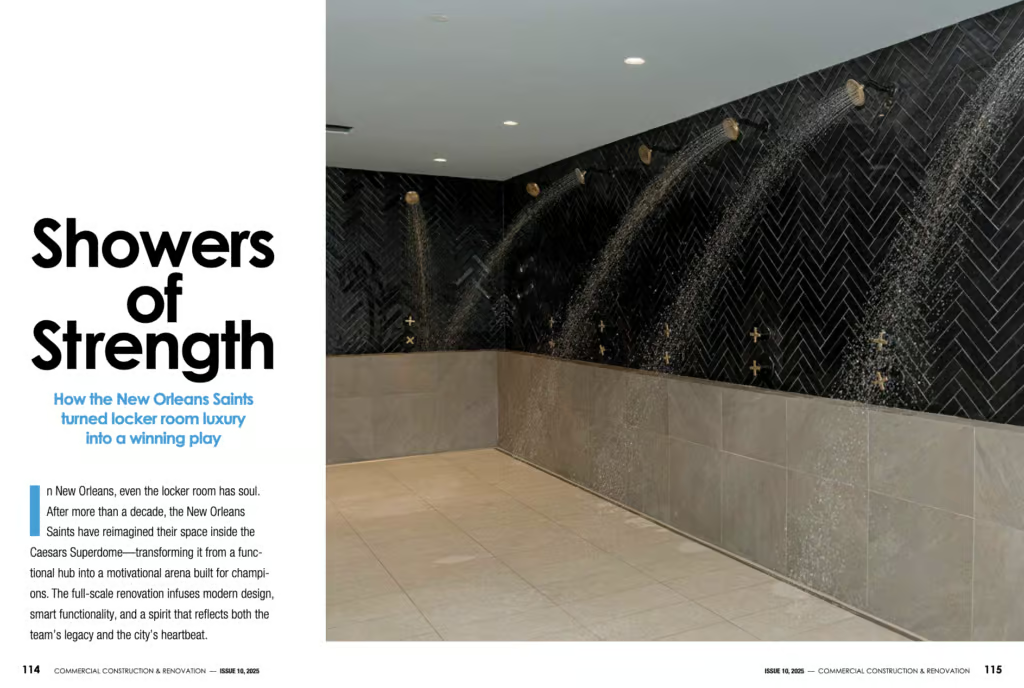
Photography should add information, too. Include installation details, product specs, or finished conditions. Write captions that clearly identify what readers are seeing, and always secure permission to publish the images and quotes. The Oatey case study below illustrates how project photography can bring the finished application to life. The large finished-project photo demonstrates how visuals can help readers understand the application and see the completed work.
How Do You Get the Details That Make a Case Study Worth Reading?
Start collecting information while the project is underway. Once crews move on, it becomes harder to retrieve records, photograph concealed work, or recall why a decision was made.
Speak with people who can explain different parts of the project, including the customer, contractor, designer, or engineer. Useful interview questions include:
- What was the most difficult requirement to meet?
- Why did you choose this approach?
- What obstacles were overcome during the project?
- What evidence supports the results?
- What would someone planning a similar project need to know before?
- Would this customer recommend this product/company or use again?
Make Your Case Study Easy to Find and Understand
Publishing a case study also creates an opportunity to answer the questions customers bring to search engines and AI tools.
For Generative Engine Optimization, or GEO, start with useful, clearly organized information. Use descriptive headings, identify companies and products consistently (use links when able), and explain technical terms when needed. Publish the main story as readable website text, with links to relevant product information and supporting resources.
Put the Story to Work
Plan how you will use the case study before publication.
Develop a trade media pitch around the project’s most relevant lesson. Use individual findings, quotes, and photos in newsletters and social posts, linking back to the full story.
Measure its value against the purpose you set. Relevant media coverage, qualified inquiries, and use in sales conversations can each help show whether the content is reaching the right people.
A strong case study gives a completed project lasting value. Documenting the problem, solution, and outcome helps prospective customers understand the decisions behind the work and assess what could apply to their own projects. This is how a project story becomes a valuable resource that builds credibility and supports better conversations with future customers.
FREQUENTLY ASKED QUESTIONS
Why are case studies important in B2B marketing?
Case studies give prospective customers evidence of how a product or service performs in practice. For building product manufacturers, they help architects, specifiers, contractors, and owners evaluate applications, understand installation considerations, and assess results. They also provide useful material for sales conversations and trade media outreach.
What should a good case study include?
A good case study includes project background, a specific customer challenge, the reasons behind the selected solution, implementation details, and documented outcomes. Attributed customer quotes and project photography add firsthand perspective and help readers understand the work. Performance claims should include enough context to explain what was measured and how.
How does GreenHouse structure its case studies?
GreenHouse writes case studies in a problem, solution, and outcome format. The problem establishes the customer’s needs and project constraints. The solution explains what was selected, why it was chosen, and how it was implemented. The outcome documents what the project achieved through verified results and firsthand observations.
Can a case study be effective without measurable results?
Yes. When performance data is unavailable, a case study can still provide value through specific, attributed observations. A contractor might explain how an installation fit within a scheduled shutdown or how the team resolved an access limitation. Clearly identify who reported the outcome, and distinguish observed results from projected benefits.
How can case studies support SEO and GEO?
Case studies provide original information about specific products, applications, and project challenges. Descriptive headings, clear company and product names, readable website text, and links to relevant resources help readers and search systems understand the content. These practices support search engine optimization (SEO) and generative engine optimization (GEO), although they do not guarantee rankings or inclusion in AI-generated answers.
How can a business use a case study after publication?
A case study can support sales presentations, customer follow-up, trade media pitches, newsletters, and social media content. Individual findings, quotes, and photos can address different audience questions while directing readers to the full story. Planning distribution early helps the case study continue working beyond its initial publication.
